Welcome to Koyo’s series of trusted healthcare articles. If you need more personalised advice, you can chat with a Koyo doctor today.
Written by: Favour Francis | Reviewed by: Ortega Ogomigo
INTRODUCTION
In many Nigerian homes, illness is not the only thing people worry about when it is time to visit the hospital.
They worry about the cost.
A father may sit for a long time with a hospital card in his hand, wondering if he should go that day or wait a little longer. A mother caring for a child with a disability may count the money in her purse more than once before leaving the house. Even before the doctor speaks, the question of money is already in the room.
Because of this, many people have come to believe something that sounds almost like a rule: that proper healthcare, especially for people living with disabilities, must always be expensive.
But this is not entirely true.
Across Nigeria, there are programs, organisations, and services that make healthcare more affordable than many people think. Some are run by the government or supported by communities and nonprofits, while others use technology to bring care closer to people’s homes.
The problem, very often, is not that help does not exist, but that many people do not know where to find it… which is where our conversation today begins.
Here’s what this article will help you understand
This article explores practical and affordable healthcare options available to people living with disabilities in Nigeria. It breaks down public health insurance, community and nonprofit support systems, and assistive health services.
In this article, you’ll learn:
- Where to find affordable healthcare options in Nigeria
- How to enrol in public health insurance and support programmes
- How assistive services and tools can make healthcare easier and more cost-efficient
WHERE TO FIND AFFORDABLE HEALTHCARE OPTIONS IN NIGERIA
1. Public Health Insurance
This involves initiatives such as the National Health Insurance Scheme (NHIS), now part of Nigeria’s National Health Insurance Authority (NHIA) system, a government-backed program designed to make healthcare more affordable for everyone, including people living with disabilities.
At its core, NHIS exists so you don’t have to always pay for everything out of pocket when you need treatment. Instead of handing new bills every time you go to the hospital, you pay smaller regular amounts (premiums), and then the scheme helps cover part of your care when you’re sick or injured.
This is especially helpful right now because many Nigerians pay for medical services entirely by themselves, what health economists call out-of-pocket healthcare payments, and that can be crushing, sometimes costing more than people can afford.
What Does the NHIS Offer?
NHIS provides real value, mainly for long-term or recurring health needs:
- It helps cover routine outpatient care, like doctor visits, tests, and essential medicines, so you don’t have to pay the full price every time.
- You can get consultations with specialists, including physiotherapists and other clinicians involved in rehabilitation care (rehabilitative medicine) that support disability-related treatment.
- It lowers the need to put your whole life on hold to raise money for hospital care.
There’s also a part of the program called the Vulnerable Group Social Health Insurance Programme, designed for people with limited income or special health needs, including people with disabilities, so they can access basic health services without huge financial strain.
How to Join the NHIS.
To enrol, you typically reach out to the NHIS office in your state or a registered health insurance provider linked with NHIS. They can guide you through registration and help you choose the right plan.
Importantly, you must remember that this isn’t free care, but it does make healthcare costs more affordable, as compared to paying everything on your own.
2. Community and Nonprofit Support
Sometimes the best healthcare support comes from local groups and nonprofits that understand the daily realities of living with a disability in Nigeria.
A mother caring for a child with cerebral palsy might struggle to afford regular physiotherapy or occupational therapy sessions. She could spend hours and money traveling to a clinic. But a community-based organisation may offer subsidised or free physiotherapy sessions right in her neighbourhood.
Examples of Support You Can Access
- Local NGOs: Organisations like Sightsavers Nigeria, LEAP Africa, and The Albino Foundation, provide health screenings, vision and hearing services, and sometimes even assistive devices at low or no cost.
- Faith-based or community groups: Many churches, mosques, and community centers run health outreach programs. These can include medical camps, free consultations, or discounted services for people with disabilities.
- Nonprofit partnerships with clinics: Some nonprofits partner with hospitals to offer reduced fees for consultations or medications. This helps reduce the burden of out-of-pocket payments.
How to Find These NGOs
- Ask your local disability support network or advocacy group.
- Search online for ‘NGO healthcare programs Nigeria’ or ‘disability support services near me’.
- Keep an eye out for community health outreach announcements in local media or social platforms.
These programs don’t replace regular medical care, but they help reduce costs and make access much more realistic for people living with disabilities.
3. Assistive Health Services
For many people living with disabilities in Nigeria, the right tools and services, often referred to as assistive technology (AT), can go a long way in helping people access care and stay independent.
What Assistive Services Include
- Mobility aids and devices, such as wheelchairs, crutches, walking frames, or prosthetics, that let you move safely to clinics or manage daily activities at home.
- Hearing aids, glasses, magnifiers, real-time captioning, or communication accessibility services
- Telemedicine or telehealth services, including video consultations, remote monitoring, and digital prescription services, can reduce trips to the hospital and the cost of transport.
Consider someone with limited mobility in Lagos. Traveling to a hospital every month for check-ups can be exhausting and expensive. But with a wheelchair-friendly clinic or telehealth service, they can reduce physical strain and costs while still getting the care they need.
Similarly, a person with partial hearing loss (hearing impairment) might struggle to communicate in a busy clinic. Access to a hearing aid or video consultations with captioning features can make visits smoother and faster, saving time and frustration.
How to Access These Services
- Many nonprofits and community health programs provide discounted or free assistive devices.
- Some private companies sell affordable aids and even offer installment payments.
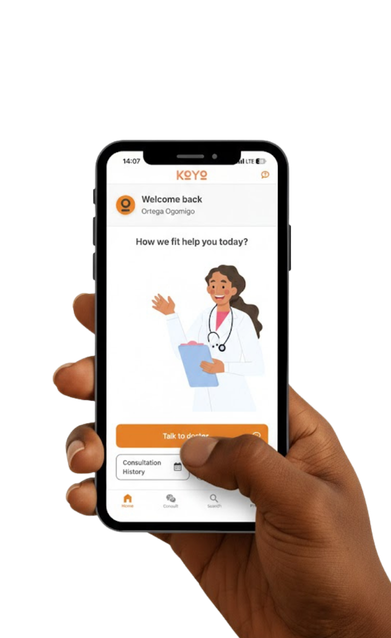
- Telehealth platforms, like KoyoHealthTech, often include accessible features like captioned calls and online prescription services, especially helpful if travel is difficult.
Using assistive services, beyond just making things easier, gives you more control over your health.
FROM THE DESK OF KOYO DOCTORS
Living with a disability in Nigeria often means planning ahead for things others may not think twice about, such as transport, access, cost, and whether a health facility will truly understand your needs. That can be tiring.
We want you to remember this: you are not asking for too much when you ask for affordable, respectful, and accessible care. Those are not special favours; they are part of good healthcare. If you ever feel confused about your options or overwhelmed by medical information, it’s okay to seek clarity.
There are support systems available, with professionals willing to listen and offer practical steps you can take to reduce both stress and cost. You deserve care just like anyone else, and a disability doesn’t change that.