Welcome to Koyo’s series of trusted healthcare articles. If you need more personalised advice, you can chat with a Koyo doctor today.
Written by: Favour Francis | Reviewed by: Dr. Ortega Ogomigo
INTRODUCTION
The afternoon sun hangs heavy over the street as Musa wheels himself toward the hospital gate, hoping today will be easier than the last visit. From where he sits, Musa can already smell the faint mix of disinfectant and medicine drifting out from inside.
He has been feeling a dull pain in his chest since morning; nothing alarming yet, but enough to worry him. He rolls closer to the entrance and stops. Three concrete steps stand between him and the door, without a ramp.
For a moment, he looks around, hoping someone might notice and perhaps help him. A man in a white shirt rushes past him, speaking loudly on his phone. A woman carrying a baby adjusts her bag and walks up the steps without looking back. The hospital is busy today, like most days.
After waiting a while, Musa sighs and slowly turns his wheelchair around. The doctor is only a few metres away, but it might as well be miles. He is reminded again of a healthcare system that is not always built for people like him.
For many people living with disabilities in Nigeria, moments like this are not unusual. Accessing healthcare is often not just about the illness itself, but about the physical, social, and communication barriers that stand between them and the care they need.
When medical check-ups are difficult to access, small health concerns can quietly grow into bigger problems. Over time, these barriers contribute to a range of health risks faced by people living with disabilities in Nigeria.
Understanding these risks is the first step toward building a healthcare system that truly includes everyone.
What We’ll Discuss Today:
In this article, we explore the main health risks faced by people with disabilities in Nigeria and what can be done about them. You’ll learn about:
- Why physical and social barriers make check-ups and treatment difficult.
- Common health complications that people living with disabilities battle.
- How online health services can make care easier to reach and more inclusive.
Healthcare Access Challenges for People Living with Disabilities in Nigeria
When we talk about healthcare access, it is easy to picture a wheelchair and a staircase. But disability is broader than mobility alone. In Nigeria, people live with physical, visual, hearing, intellectual, and psychosocial disabilities, and each comes with its own barriers to care.
For someone with a mobility impairment, a flight of stairs without a ramp can stop a hospital visit before it begins. For a person with visual impairment, poorly marked hospital corridors or unreadable prescription instructions create safety risks. For someone who is deaf or hard of hearing, the absence of a sign language interpreter can mean leaving a consultation without fully understanding the diagnosis. A person with an intellectual or developmental disability may struggle in rushed consultations where no one takes time to explain things clearly.
These are different disabilities, different barriers, but the same result: delayed or limited care.
Some common healthcare access challenges for individuals living with disabilities include:
- Health facilities not designed for physical accessibility
- Lack of sign language interpreters or assistive communication tools
- Medical information not provided in accessible formats, such as audio, braille, or simplified language
- Healthcare workers with limited training in inclusive care
- Stigma and dismissive attitudes during consultations
Clinically, these barriers increase risk. When communication is broken, symptoms may be misunderstood, and when patients feel unheard, they are less likely to return for follow-up care. Over time, this leads to preventable complications that could worsen health.
Next, we’ll look at the common health risks and secondary conditions that often develop as a result of these access gaps.
Common Health Risks for People Living with Disabilities in Nigeria
Research from the World Health Organization shows that people with disabilities are more likely to experience poorer health outcomes than the general population, not because of their disability alone, but because of barriers to timely and quality care. The National Library of Medicine also explains that people with disabilities often face higher healthcare costs and reduced access to services, especially in low and middle-income countries like Nigeria.
In simple terms, when you can’t access care early, small health issues can turn into bigger ones.
These are some of the most common health problems experienced by people living with disabilities in Nigeria, especially when access to regular medical care is limited.
1. Secondary Health Conditions
A secondary condition is a health problem that develops because of an existing disability or because proper care was delayed.
For example:
- A person who uses a wheelchair may develop pressure sores (also called pressure ulcers or decubitus ulcers) if they sit for long periods without proper cushions or regular medical review.
- Someone with limited mobility may experience muscle stiffness, clinically known as spasticity, or joint contractures without regular physiotherapy.
- A person with visual impairment may have untreated eye infections if routine eye checks are not accessible.
These conditions are often preventable with consistent monitoring and care.
2. Chronic Diseases and Poor Management
People living with disabilities can also develop common chronic conditions such as:
- Hypertension
- Diabetes
- Asthma
- Heart disease
The issue is not that disability causes these conditions directly. The problem is management. If clinic visits are stressful or expensive, these routine checks may be skipped. Over time, uncontrolled hypertension can lead to stroke. Poorly managed diabetes can result in nerve damage (diabetic neuropathy), kidney disease (diabetic nephropathy), or vision loss. These are preventable outcomes if only they are regularly monitored.
3. Higher Risk of Infections and Complications
Limited access to clean facilities, rehabilitation services, and follow-up care increases vulnerability to infections.
For instance:
- Untreated wounds can turn into severe infections.
- Poor bladder management in some spinal cord conditions can lead to repeated urinary tract infections (UTIs)
- Delayed treatment of respiratory symptoms can lead to pneumonia, a serious lower respiratory infection.
4. Reduced Preventive Care
Preventive healthcare, such as screenings, vaccinations, and routine checks, is often overlooked, but this is what keeps people healthy in the long term.
If a woman living with a disability cannot easily access a screening center, she may miss early detection for breast or cervical cancer. If a child with developmental disability does not receive regular monitoring, nutritional or growth concerns may go unnoticed.
Prevention saves lives, but access is required, which many do not have.
How Online Health Services Can Make Care Easier to Reach and More Inclusive
When getting to a hospital feels like a battle, access to proper care feels almost unreachable. This is where online health services, also known as telehealth, can make a difference.
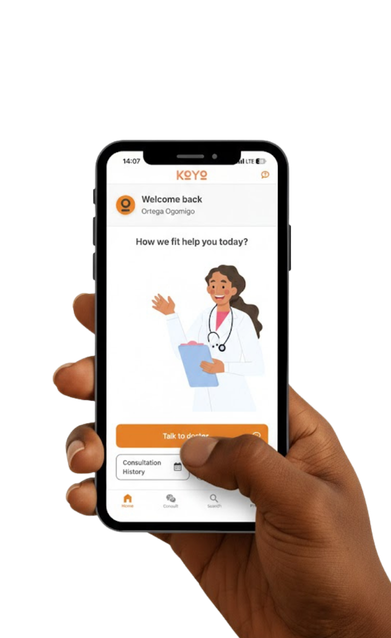
Telehealth simply means speaking with a licensed doctor or health professional through your phone. This could be through a video call or messaging platform instead of visiting a clinic physically. For many people living with disabilities in Nigeria, this removes the first major barrier: movement.
You don’t have to find transport.
You don’t have to worry about stairs.
You don’t have to sit for hours in an uncomfortable waiting area.
Care actually comes to you.
In settings with limited infrastructure, telemedicine helps to bridge the gap between patients and health providers.
Here’s how online health services improve healthcare access:
- Easier consultations: A person with mobility challenges can speak to a doctor from home.
- Better follow-up care: Chronic conditions like hypertension or diabetes can be monitored through regular virtual check-ins.
- Improved communication: For some individuals, typing symptoms in a chat may feel easier than speaking in a rushed physical consultation.
- Reduced cost and stress: Fewer transport expenses and less physical strain.
Telehealth also supports early intervention. For example, if someone notices a new symptom, like a persistent cough or pain, they can quickly consult a professional instead of waiting until the condition worsens.
Of course, telehealth does not replace emergency care or physical examinations when necessary. Some conditions still require an in-person assessment. But for routine consultations and follow-ups, online care can be a safe and effective option.
In Nigeria, platforms like KoyoHealthTech are helping to make this model more accessible by connecting users directly to licensed doctors through their phones. For individuals who face daily access barriers, this kind of service can help with earlier support and guidance.
More importantly, telehealth supports independence, as it gives people living with disabilities more control over how and when they seek care.
Overall, inclusive healthcare is all about building systems that meet people where they are, and online health services are one step toward closing that gap in Nigeria.
From the Desk of Koyo Doctors
Living with a disability should never mean receiving less care.
If you notice new symptoms or feel unsure about a change in your health, do not ignore it. Early medical guidance can prevent complications and, in some cases, save lives.
We understand that accessing healthcare can be challenging for many people living with disabilities in Nigeria. That is why licensed doctors are available on Koyo to provide timely medical advice, answer your questions, and guide you on the next appropriate step. With a mobile device, you can speak to a doctor without the added stress of travel or long waiting hours.
Just like every other person, you deserve to be listened to and treated with respect.