Welcome to Koyo’s series of trusted healthcare articles. If you need more personalised advice, you can chat with a Koyo doctor today.
Written by: Favour Francis | Reviewed by: Dr. Ortega Ogomigo
INTRODUCTION
Many people in Nigeria wish not to have children with albinism, not because they do not love them, but because of what it takes to care for them. And honestly, they cannot be blamed. The cost is not just financial. Caring for a child with albinism can take a toll on you emotionally and mentally, especially if you’re trying to figure things out on your own.
As a mother of a child with albinism, there are a few things you need to understand to make life easier for both you and your child. And having a doctor you can easily reach out to whenever you have concerns to guide you every step of the way cannot be overemphasised. A child with albinism is just like any other child, but they need a little extra care, especially when it comes to their skin and vision.
By the end of this article, you’ll learn:
- What albinism is
- What albinism is not: myths and misconceptions
- What to pay attention to when caring for a child with albinism
- When to see a doctor
- How to contact a doctor online in Nigeria
What is Albinism?
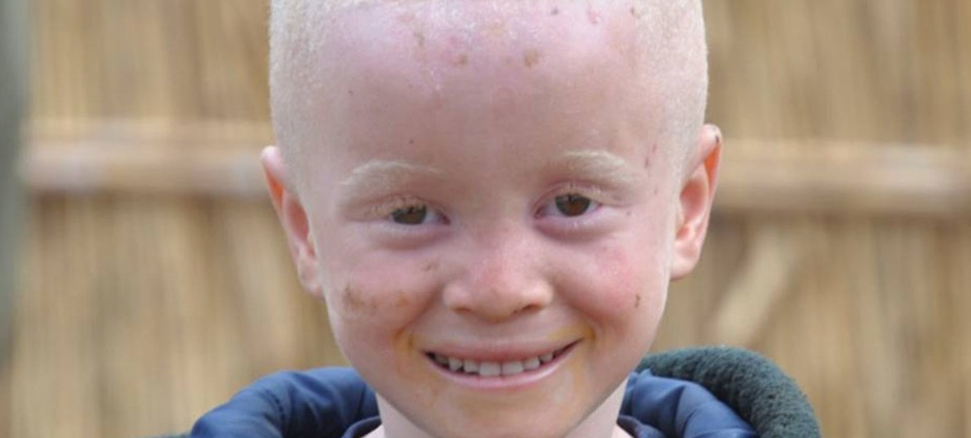
Albinism is a genetic condition that affects how the body produces melanin. When a child is born with albinism, it means that they lack the melanin pigment, which then leads to very light skin, hair, and eyes.
More than just a difference in colour, melanin also influences the development of the eyes, so albinism can affect how a child sees. This is why many children with albinism may experience vision problems from an early age.
What Albinism is Not: Common Myths and Misconceptions Explained
There are many wrong beliefs about albinism, and these can make caring for your child more confusing or even stressful. Let’s clear a few of them up.
Albinism is not a disease that needs to be ‘cured’. It is a genetic condition that your child is born with.
It is not something your child can ‘outgrow’ as they get older. It is a lifelong condition, and it can be managed with the right care.
Albinism is not caused by anything you did or did not do during pregnancy, nor is it a spiritual sign or a result of a curse. Many Nigerian mothers are often worried about this, but it is important to know that it is not your fault.
Albinism is also not the same as vitiligo. While vitiligo causes patches of skin to lose colour over time, albinism affects the entire body from birth, including the skin, hair, and eyes.
It is also not the same as being blind. Children with albinism may have vision challenges, but many can still see and learn with the right support.
What to Pay Attention to When Caring for a Child with Albinism
Taking care of a child with albinism means understanding that they can be sensitive. This includes both their physical well-being, like skin and eyes, and their emotional well-being, such as confidence and self-esteem.
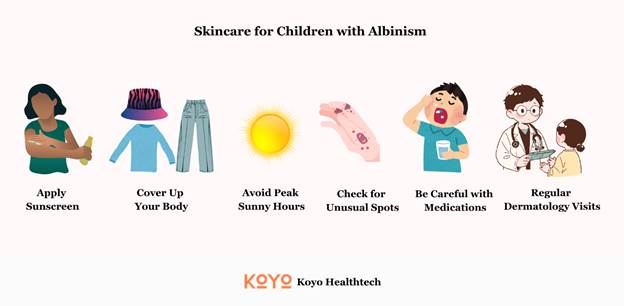
How to Care for the Skin
Children with albinism have very sensitive skin that can burn easily in the sun. Doctors often warn that if their skin isn’t properly protected, they may be at higher risk for skin damage or skin-related illnesses like cancer later in life.
To protect your child’s skin:
- Use sunscreen: SPF 50 or higher is recommended. Because their skin is more sensitive, reapply every two hours when they are outdoors.
- Cover up: Breathable long-sleeve tops, long trousers, and hats help shield the skin from the sun without causing discomfort, even in hot weather.
- Avoid peak sun hours: The sun is strongest in Nigeria between 10 a.m. and 4 p.m., so plan outdoor activities carefully.
- Check for unusual spots: Teach your child to tell you if they notice any new marks, sores, or changes on their skin.
- Be careful with medications: Some medicines can increase skin sensitivity. Always consult your doctor before giving any new medication.
- Regular dermatology visits: Take your child for skin checkups every 6 to 12 months to catch any issues early.
How to Care for the Eyes
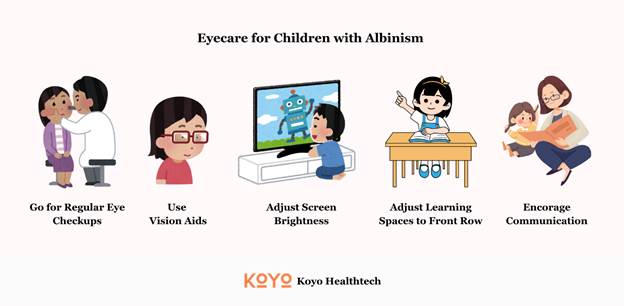
Because of their sensitive eyes, children with albinism may struggle with vision. This makes the eyes an important focus when caring for your child.
- Regular eye checkups: Visit an optometrist or ophthalmologist to monitor your child’s vision. This can help detect issues like nystagmus (shaky eye movements) or photophobia (sensitivity to light) on time.
- Glasses or vision aids: Many children with albinism need vision aids, such as prescription glasses.
- Protect from bright light: When stepping out in the sun, sunglasses or baseball hats can be worn to help reduce sun intensity on the eyes. While Children with albinism can watch TV or use phones, their eyes may get tired more quickly. Too much screen time, especially on bright devices, can cause discomfort or even headaches. You can help by:
- Adjusting the screen brightness to a comfortable level
- Ensuring the use of devices in well-lit rooms to reduce glare
- Encouraging regular breaks from screens (every 20–30 minutes)
- Adjust learning spaces: At school, ensure they sit where they can see the board clearly to avoid straining their eyes.
- Encourage communication: Ask your child if they’re struggling to see or read something. This helps you support them before it leads to any form of frustration.
Taking these steps makes your child able to fully participate in school and play, while keeping them healthy and comfortable.
When to See a Doctor
After a child is diagnosed with albinism, regular care usually involves specialists (optometrist or ophthalmologist for eye care, and a dermatologist for skin health) rather than general doctor visits.
These specialists are trained to notice any changes early and guide you on the right care for your child. This is why it is clinically advised to always go for routine checkups, as it makes it easier to manage any concerns before they become serious.
Frequently Asked Questions (FAQs)
- What Sunscreen is Best for People Living with Albinism in Nigeria?
For maximum skin protection, doctors often recommend a broad-spectrum, water-resistant sunscreen. Look out for sunscreens designed for high sun exposure.
SPF 30+ is good, but SPF 50+ is more preferable, especially in a sunny country like Nigeria.
Make sure to reapply every two hours when outdoors, and even more often if your child is sweating or has been in water.
- Does Albinism Count as a Disability?
Yes. Albinism can be considered a disability, mainly because of the vision challenges that often come with it. Many children with albinism have some level of visual impairment, which may affect how they learn or carry out certain activities.
Their skin is also more sensitive to the sun, so they need to be more careful with sun exposure as they grow.
However, with the right support, from parents, doctors, and society as a whole, children with albinism can live active and independent lives.
- How Can I Reach a Doctor in Nigeria if I’m Concerned About My Child?
If you have any concerns about your child’s skin, vision, or overall health, the first step is to speak with a health professional.
You can visit a nearby hospital or clinic to see a general doctor, who may refer you to a specialist, like a dermatologist or an eye doctor, if needed.
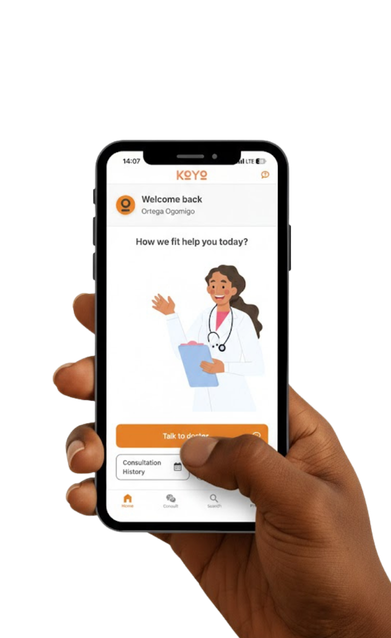
If it’s not easy to visit a hospital right away, you can also speak to a licensed doctor online through platforms like Koyo, where you can ask questions and know the next steps to take, all from your phone.
The most important thing is not to ignore your concerns. Early guidance can make a big difference in your child’s care.
From the Desk of Koyo Doctors
We know that caring for a child with albinism can feel overwhelming, which is why it’s important to seek the right knowledge and support to make each day easier.
Your child can live a healthy and active life. You just have to pay attention to them and encourage them. Speaking positively and allowing them to engage in normal childhood activities helps build their confidence, so they grow up seeing themselves as capable, just like any other child.