Welcome to Koyo’s series of trusted healthcare articles. If you need more personalised advice, you can chat with a Koyo doctor today.
Written by: Favour Francis | Reviewed by: Dr. Ortega Ogomigo
INTRODUCTION
Bleeding during pregnancy is a common experience that can have both harmless and serious causes.
In the early stages, light bleeding may be normal, especially during implantation. However, heavier bleeding or bleeding with symptoms like pain, dizziness, or clots may point to complications such as miscarriage or ectopic pregnancy.
As your pregnancy progresses into the second and third trimesters, bleeding is more likely to be a sign of a medical issue. Conditions like placenta previa, placental abruption, or early labour can put you and your baby at risk.
Because it’s not always easy to tell the difference, any bleeding during pregnancy should be taken seriously. That is why having an active telehealth platform is essential to keep you in constant contact with a medical professional, as they are the best people to determine whether there is a problem or not.
In this article, you’ll learn:
- The difference between spotting and bleeding in pregnancy
- When bleeding may be normal
- Common causes of bleeding across the first, second, and third trimesters
- Serious complications that may occur due to bleeding during pregnancy
- Warning signs of bleeding during pregnancy that mean you should see a doctor immediately
What is the Difference Between Spotting and Bleeding During Pregnancy?
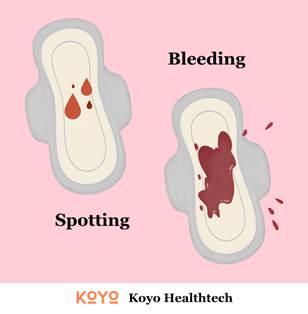
Similar to the small drops of blood you might notice at the start of your period, spotting is a very light form of bleeding. It is usually light in colour, often pink or brown, and most of the time happens without pain. Spotting is quite common in early pregnancy, especially in the first trimester, and in many cases, it is nothing to worry about.
Bleeding, on the other hand, is heavier. It goes beyond just a few drops; you may need to use a pad or panty liner to avoid staining your clothes. It can also come with symptoms like cramps or discomfort.
If what you’re experiencing changes from spotting to heavier bleeding, it could be a sign that something isn’t right. It’s always best to speak with a doctor about any changes you notice in your body during pregnancy.
What Are the Causes of Bleeding During Pregnancy?
There are different causes of bleeding during pregnancy, and this can vary from the different trimesters, starting from the first to the third trimester.
- First Trimester (0–12 weeks)
Bleeding during the first trimester can be normal or a sign of a problem, depending on the cause and accompanying symptoms.
Implantation Bleeding (Usually Normal)
One common and usually harmless cause is implantation bleeding. This happens when the fertilized egg attaches itself to the wall of the uterus. It typically occurs about 6 to 12 days after conception.
It is usually:
- Light (spotting)
- Pink or brown in colour
- Without cramps or with very mild discomfort
- Short-lived (lasting about 1–3 days)
It is much lighter than a normal period and does not contain clots. Despite this bleeding, the pregnancy can continue normally and be carried to full term.
Health professionals often reassure mothers that this type of bleeding is common in early pregnancy and, on its own, is usually not a cause for concern.
Miscarriage (Needs Medical Attention)
Not all first-trimester bleeding is harmless. Bleeding due to miscarriage is usually heavier and may be noticed as:
- Bleeding heavier than a normal period
- Passage of clots
- Painful cramps or lower abdominal pain
- Dizziness or lightheadedness
- In some cases, fainting
In such situations, doctors advise medical evaluation as soon as possible to determine the cause of the bleeding and provide the necessary care.
Ectopic Pregnancy (Medical Emergency)
In some cases, bleeding in the first trimester may be due to an ectopic pregnancy.
This occurs when the pregnancy develops outside the uterus, most commonly in the fallopian tube.
It is often associated with:
- Bleeding
- Severe lower abdominal pain
- Dizziness or fainting
Doctors consider this a medical emergency, as it can be life-threatening if not treated quickly. You should seek immediate medical attention.
2. Second Trimester (13–27 weeks)
Bleeding can also occur during the second trimester, which is from about 13 to 26/27 weeks.
At this stage, you can already feel your baby move. There’s excitement, anticipation, and a growing connection to the pregnancy. So, when bleeding happens, it can feel confusing.
Can bleeding occur even when things seem fine? Yes. Is it a problem? Yes. Should you see a doctor? Absolutely.
Doctors strongly advise that any bleeding in the second trimester should be taken seriously, as it can pose risks to both you and your baby. So, as an expecting mother in Nigeria, having medical care at your convenience should be a priority, especially at this stage.
Causes of Second Trimester Bleeding
These are often grouped based on where the bleeding is coming from.
- Placental Problems (Placenta Previa)
This occurs when the placenta is positioned low in the uterus, sometimes covering the cervix (the opening of the womb), instead of being at the top.
Because of this position, even small movements can trigger bleeding.
This type of bleeding:
- May happen suddenly, without any obvious cause
- Can also occur after sexual intercourse
- May be triggered by anything that causes contractions, such as fever, malaria, or infections
Placenta previa is usually detected through an ultrasound scan. However, in some cases, the first sign may simply be bleeding.
Clinically, this condition is considered serious because it can lead to complications if not properly managed.
- Placental Abruption (Abruptio Placenta)
This happens when the placenta separates from the wall of the uterus earlier than it should—either partially or completely.
Unlike placenta previa, this type of bleeding can be painful.
Common signs include:
- Bleeding with abdominal pain
- A firm or tender abdomen
Risk factors include:
- High blood pressure during pregnancy
- Injury to the abdomen (from a fall or accident)
- Substance use during pregnancy
- A previous history of similar complications
Health professionals treat this as a serious condition that requires urgent care.
Other possible causes of bleeding in the second trimester include:
- Cervical irritation
- Sexually transmitted infections
- Cervical polyps
- Vasa previa (where blood vessels cross near the cervix)
- Second-trimester miscarriage
3. Third Trimester (28 weeks and beyond)
Bleeding in the third trimester occurs from around 28 weeks of gestation, when the pregnancy has advanced and reached the age of viability in Nigeria.
Some causes are similar to the second trimester, such as:
- Placenta previa
- Placental abruption (abruptio placenta)
Other causes include:
- Intrauterine fetal demise: when the baby dies in the womb
- Bloody show: a plug of blood that seals the cervix, which can be an early sign of labor
- Uterine rupture: a rare but serious emergency that requires immediate medical attention
Doctors consider any bleeding at this stage to be potentially serious, as it can put mother and baby at risk.
From the Desk of Koyo Doctors
If you notice any bleeding during your pregnancy, please see a doctor right away.
Not all bleeding is harmless, and some can become serious if ignored. Getting help early can keep both you and your baby safe.
With your condition, you need doctors who are ready to guide you on what to do next whenever you have concerns about bleeding or any other pregnancy issues.
Every expecting mother in Nigeria is advised to have medical guidance at their beck and call. With your mobile phone, you can speak with professional doctors on the Koyo Navigate App. Medical care doesn’t have to be a difficulty.